1. Smarter, Faster Talent Sourcing
Traditional recruitment sourcing relied heavily on job portals, databases, and referrals. While effective, it was time-consuming and often limited to active job seekers. AI has expanded this universe dramatically.
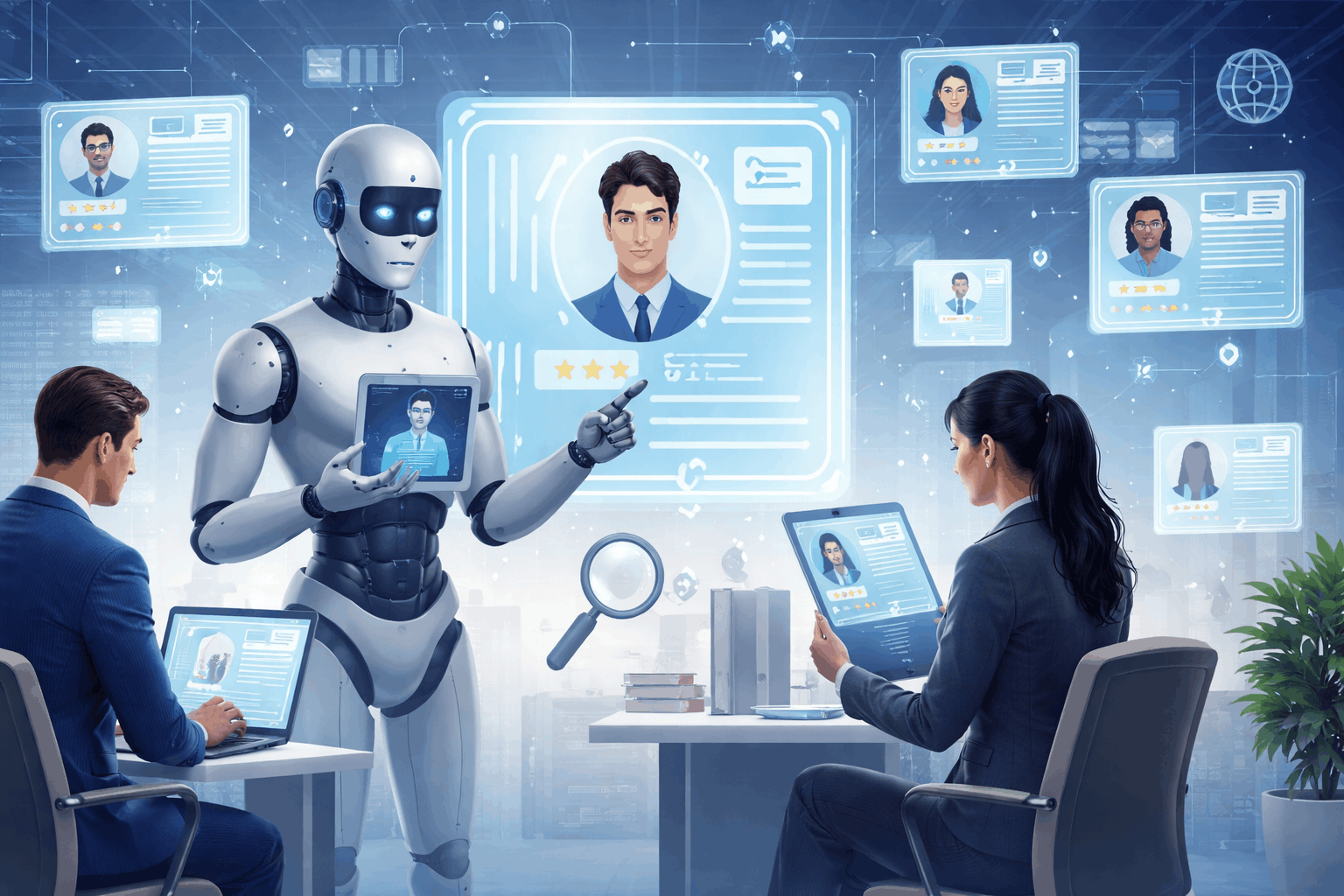
AI-powered sourcing tools can scan millions of profiles across platforms, identify passive candidates, and match them to roles based on skills, experience, career trajectory, and even inferred potential. Instead of recruiters manually filtering hundreds of resumes, AI narrows the pool to the most relevant profiles within minutes.
This means recruiters spend less time searching and more time engaging. The result? Faster turnaround times, deeper talent pools, and access to candidates who may never have applied through traditional channels.
2. Resume Screening That Goes Beyond Keywords
One of the biggest bottlenecks in recruitment has always been resume screening. Human screening is subjective, inconsistent, and prone to fatigue. AI changes this by evaluating resumes at scale objectively and consistently.
Modern AI tools don’t just scan for keywords. They analyze context, transferable skills, role progression, and even career gaps. For example, a candidate transitioning from hospitality to customer success may be overlooked by a human screener, but AI can recognize overlapping competencies like communication, problem-solving, and stakeholder management.
When configured correctly, AI helps recruiters’ surface hidden talent and make data-backed shortlisting decisions while still leaving the final judgment to human expertise.
3. Reducing Bias (When Used Responsibly)
Bias - conscious or unconscious - has long influenced hiring decisions. Names, gender, educational background, or career breaks can unintentionally affect how candidates are perceived.
AI has the potential to reduce this bias by focusing on skills, performance indicators, and role fit rather than personal identifiers. Blind screening tools can remove names, photos, age, and other demographic data from resumes, enabling more equitable shortlisting.
However, it’s important to note: AI is only as unbiased as the data it’s trained on. If historical hiring data reflects bias, AI can replicate it. That’s why responsible recruitment firms use AI as an assistive tool combined with human oversight to ensure fairness rather than automation without accountability.
4. Enhanced Candidate Experience at Scale
Candidate experience is no longer a “nice-to-have.” In a competitive talent market, it directly impacts employer brand.
AI-driven chatbots and virtual assistants now handle initial candidate interactions answering FAQs, scheduling interviews, sharing updates, and even conducting preliminary assessments. Candidates receive faster responses, clearer communication, and fewer black holes in the hiring process.
For recruiters, this means reduced administrative load. For candidates, it means a more transparent and respectful hiring journey regardless of whether they are shortlisted or not.
5. Predictive Hiring and Better Decision-Making
One of AI’s most powerful applications in recruitment is predictive analytics. By analyzing historical hiring data, performance outcomes, and attrition patterns, AI can help predict which candidates are most likely to succeed in a role.
For example, AI can identify patterns such as:
- Which skills correlate with high performance
- Which profiles have higher retention rates
- Which hiring channels deliver the best long-term talent
This shifts recruitment from reactive hiring to strategic workforce planning. Instead of asking, “Who can fill this role quickly?”, organizations start asking, “Who will create long-term value here?”
6. Recruiters Are Evolving, Not Being Replaced
Despite common fears, AI is not replacing recruiters - it’s redefining their role.
Administrative tasks like resume screening, interview scheduling, and data entry are increasingly automated. This frees recruiters to focus on what machines can’t replicate: relationship-building, stakeholder alignment, cultural assessment, negotiation, and strategic advisory.
The most successful recruiters today are those who know how to leverage AI while applying human judgment where it matters most. Recruitment is becoming less transactional and more consultative, and AI is enabling that shift.
7. What This Means for Companies and Candidates
For companies, AI-driven recruitment means faster hiring, better quality of hire, reduced costs, and more informed decisions. It also demands responsibility choosing the right tools, monitoring outcomes, and ensuring ethics and transparency remain intact.
For candidates, AI means more visibility, faster feedback, and greater emphasis on skills over pedigree. At the same time, candidates must adapt optimizing resumes for AI screening, building digital footprints, and showcasing skills clearly.
The Future of Recruitment Is Human + AI
AI is not changing recruitment by removing the human element, it’s strengthening it. When used thoughtfully, AI allows recruiters to be more strategic, inclusive, and impactful.
The future of recruitment belongs to those who strike the right balance: combining technology-driven intelligence with human insight, empathy, and trust. Because while AI can match skills to roles, only humans can truly match people to purpose.







 1 jan, 2026
 +91 98840 76858
 30 Jan 2026
 Talent Spotter